
Bark & Book guides
7 Mistakes You're Making with Your Mobile Grooming Schedule (and How to Fix It)
7 Mistakes You're Making with Your Mobile Grooming Schedule (and How to Fix It)
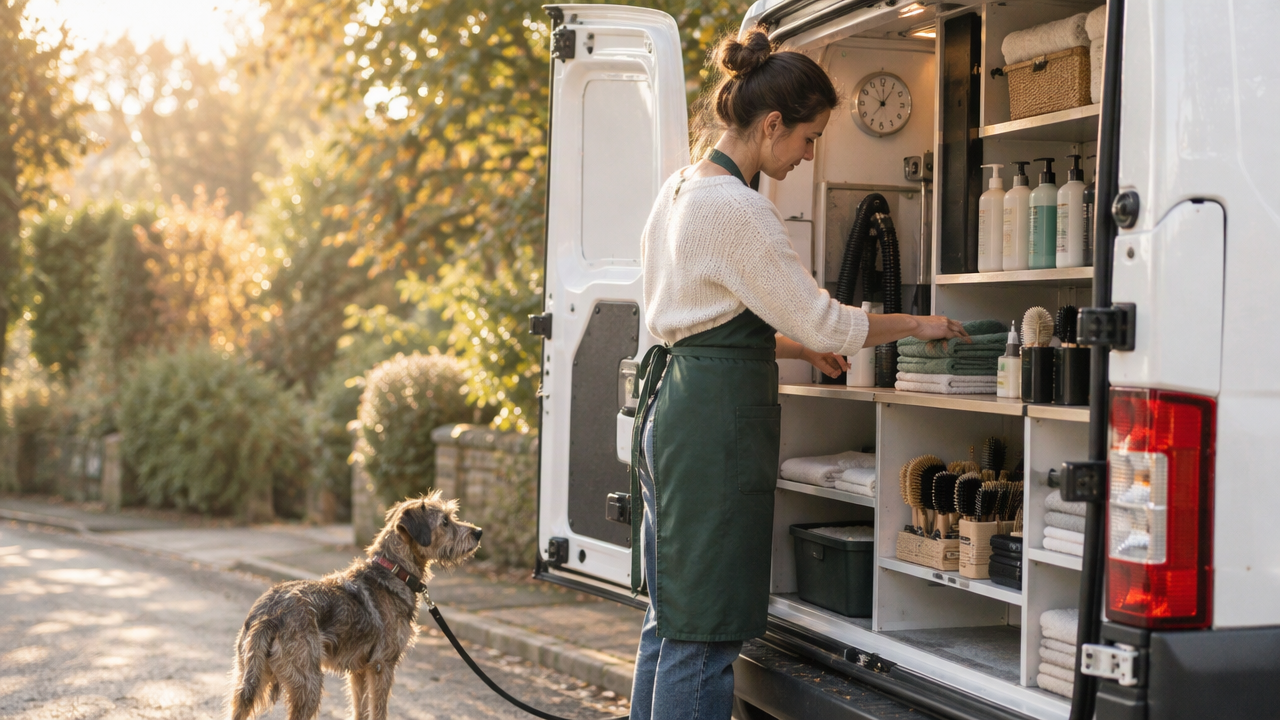
Most grooming schedules fail because the round is too full, a small delay has nowhere to go and reminders do not protect the next slot.
A good schedule is not about fitting in more dogs. It is about fitting in the right dogs, in the right order, with enough time to do the work well.
1. Booking every slot, every day
It is tempting to fill every gap. A full day looks like a good day, until a dog takes longer than expected and the whole round slips.
The fix: Leave a gap. A 15-minute gap between jobs is not wasted time. It is travel, a break, and a buffer for the dog that needs more time. If you finish early, you can message the next client and ask if they are ready. If you run late, the gap saves the next slot.
2. Booking by the clock, not by the dog
A two-hour slot for a small, short-coated dog is not the same as a two-hour slot for a large, matted dog. If you book by the clock, you will run late.
The fix: Book by the dog, not the clock. Keep a note of how long each dog takes, and use that to set the slot. A first visit should always get a longer slot, because you do not know the dog yet.
3. Letting the round decide the order
If you let clients pick any time, you end up driving back and forth across the same area, and the day takes longer than it should.
The fix: Group jobs by area, and offer times that fit the round. “I’m in your area on Tuesday morning” is better than “Any time works.” It saves travel, and it keeps the day efficient.
4. No buffer for the dog that needs more time
Some dogs take longer. A nervous dog, a matted coat, a dog that has not been groomed in a while — they all need more time. If you do not plan for it, the next client waits.
The fix: Add a buffer to the dogs you know take longer. If a dog usually takes an extra 20 minutes, book it. The client will not mind, and the next client will not wait.
5. Reminders that do not protect the next slot
A reminder the night before is good, but it does not stop a client from cancelling at the last minute, or from not being home.
The fix: Send a reminder the day before, and a short message on the day. “I’m on my way, see you in 20 minutes” is enough. If a client is not home, you have time to move the next job forward, and the day keeps moving.
6. Taking every booking, even when it does not fit
It is hard to say no, especially when you are starting out. But a booking that does not fit the round, the dog or the day will cost you time, and it will cost the next client time too.
The fix: Say no to the bookings that do not fit, and suggest another time. “I can’t do Tuesday, but I can do Thursday morning” is better than a Tuesday that does not work.
7. No plan for the day that goes wrong
A van breaks down, a dog is sick, a client cancels. It happens. If you have no plan, the day falls apart.
The fix: Keep a short list of clients you can move, and a short message you can send. “I’m running late, can we move to Thursday?” is better than a missed appointment and a lost client.
How to put it together
- Leave a gap between jobs.
- Book by the dog, not the clock.
- Group jobs by area.
- Add a buffer for the dogs that need it.
- Send a reminder the day before, and a message on the day.
- Say no to the bookings that do not fit.
- Keep a plan for the day that goes wrong.
If you do those seven things, the schedule will work for you, not against you. And if it slips, you will know why, and you will know how to fix it.